Research News

COMPUTER SCIENCE, DATA SCIENCE - Whether to help conservation managers set hunting limits for mule deer, aid rangers in poaching prevention on African wildlife reserves, or inform public health officers about reducing the prevalence of diabetes in rural India—the tools of data science are increasingly being applied to fields where their utility has historically been less obvious.
COMPUTER SCIENCE and CYBERSECURITY - Cybersecurity experts from the state’s three largest research universities — University of Oregon, Oregon State University and Portland State — have joined together to launch the Oregon Cybersecurity Center of Excellence, with the goal of improving Oregon’s resilience to cyberattacks. It was created by the passage of House Bill 2049, which was signed into law by Oregon Gov. Tina Kotek in July.
DATA SCIENCE - A University of Oregon research team has landed a $3 million federal grant to work with Indigenous and rural communities in Oregon to find ways of reducing climate-changing carbon in the atmosphere in ways that build trust with historically marginalized groups.
BIOLOGY, DATA SCIENCE - University of Oregon ecologist Lauren Ponisio has been awarded a fellowship from the Ecological Society of America for research and outreach that has proven her an exceptional leader.
CHEMISTRY & BIOCHEMISTRY, COMPUTER SCIENCE - Three more University of Oregon scientists have landed coveted awards from the National Science Foundation’s Faculty Early Career Development Program, funding their research for the next five years. 
COMPUTER SCIENCE, ENGLISH, HISTORY - Six UO faculty members were selected for Fulbright Scholars awards, helping the University of Oregon earn recognition as a top Fulbright producing institution from the U.S. Department of State the 2022-23 academic year. Four of the six Fulbright Scholar recipients have accepted placements for the 2022-23 academic year.
COMPUTER SCIENCE - Earthquakes are often a back-of-the-mind threat for residents of the Pacific Northwest, but nevertheless a growing concern as the years go on. A better understanding of earthquake processes, including nucleation and shaking, and its associated risks to communities, would provide residents with more peace of mind.
A University of Oregon computer scientist working to make artificial intelligence even more useful by improving the way networks handle the large volumes of data needed by machine learning.
COMPUTER SCIENCE - UO computer scientists have been awarded more than $1 million from the National Science Foundation to design better methods to monitor computer networks.
COMPUTER SCIENCE - Cybersecurity is a growing emphasis in the University of Oregon Department of Computer Science. Department faculty in the UO Center for Cyber Security and Privacy collaborate with colleagues from philosophy, law, business, and other areas to research—and help thwart—threats to internet traffic, cryptocurrency, social media networks, infrastructure security, and more.
COMPUTER SCIENCE - Ram Durairajan wants to future-proof the Internet, and three new grants will help him do so. The UO computer scientist has scored more than $2 million in funding from the National Science Foundation and $200,000 from the Internet Society Foundation.
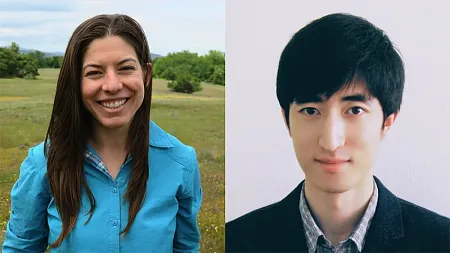
BIOLOGY, COMPUTER SCIENCE - Plant community ecologist Lauren Hallett and computer scientist Lei Jiao are getting a boost from the National Science Foundation through prestigious Career Awards, which are among the most sought-after grants from the foundation.
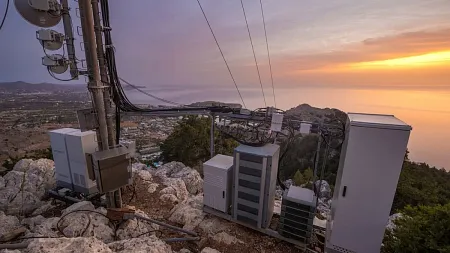
COMPUTER SCIENCE, EARTH SCIENCES - University of Oregon research inspired by an undergraduate has uncovered a communications hazard that could accompany earthquakes along the Cascadia subduction zone: Internet traffic and cell signaling facilities could be crippled.