COMPUTER SCIENCE - Assistant professor Ramakrishnan Durairajan has been awarded a Faculty Early Career Development Award from the National Science Foundation for his research into computer networks that use multiple cloud computing services.
HISTORY, COMPUTER SCIENCE, RELIGIOUS STUDIES - Open Oregon Educational Resources has awarded four grants, totaling more than $101,000, to University of Oregon faculty members who proposed innovative ideas for textbook and resource solutions.
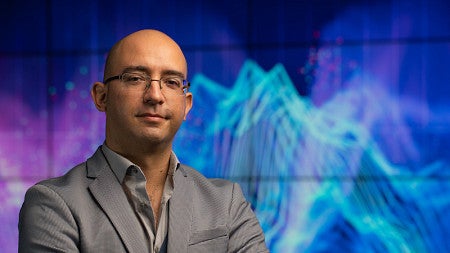
PHILOSOPHY, DATA SCIENCE - A member of the University of Oregon Presidential Initiative in Data Science, Alvarado studies computers and how people use them. He recalls, in graduate school, how the emerging field of complexity science led him to observe that breakthroughs in various areas were made possible only through computer programming. He’s been grappling with technology’s role in knowledge creation ever since.
COMPUTER SCIENCE - Ram Durairajan wants to future-proof the Internet, and three new grants will help him do so. The UO computer scientist has scored more than $2 million in funding from the National Science Foundation and $200,000 from the Internet Society Foundation.
COMPUTER SCIENCE - The University of Oregon’s annual Cyber Resilience Summit will bring in expertise from federal investigators as well as leaders from the private sector to discuss cyberthreats and share skills to combat them. The one-day online summit will be preceded by a new UO-hosted statewide cyber competition.
DATA SCIENCE, ENVIRONMENTAL STUDIES - The university’s chief academic officer has launched a campus-wide effort to build on strengths in academia, with initiatives in data science, diversity, environment, innovation, and sport and wellness.
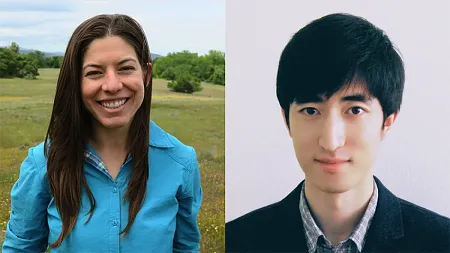
BIOLOGY, COMPUTER SCIENCE - Plant community ecologist Lauren Hallett and computer scientist Lei Jiao are getting a boost from the National Science Foundation through prestigious Career Awards, which are among the most sought-after grants from the foundation.
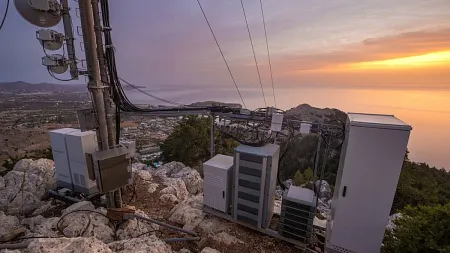
COMPUTER SCIENCE, EARTH SCIENCES - University of Oregon research inspired by an undergraduate has uncovered a communications hazard that could accompany earthquakes along the Cascadia subduction zone: Internet traffic and cell signaling facilities could be crippled.