
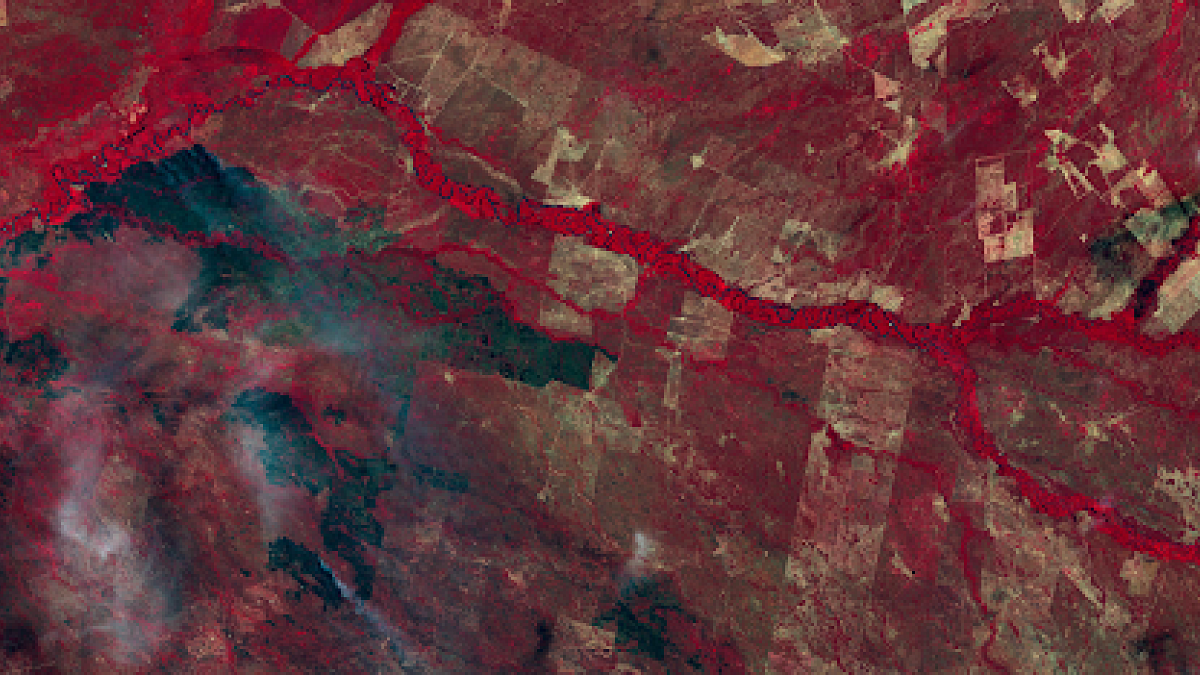
It might be hard to believe that one researcher alone can count climate change, cancer treatments, the justice system and college athletics among his areas of interest, but Data Science Assistant Professor Jake Searcy in the College of Arts and Sciences (CAS) does. Although Searcy is not a medical doctor, ecologist or lawyer, the support he can provide with the tools of data science enhances research in all these fields and more.
Data science is a growing field in large part because of its potential application to a wide variety of other fields, and CAS’s data science program is supporting researchers like Searcy in leading the way. Utilizing emerging technology like AI and machine learning to solve some of the biggest problems facing our world is one of the ways Searcy is contributing.
“If we want AI and machine learning to have a positive impact on our society, it has to be making positive impacts in these really critical, high-stakes environments. It's going to transform the world, so those are the areas I like working in,” Searcy said. “It's a challenge, but the high stakes are why it's worth doing.”
His interest in data science emerged initially out of necessity. During his undergraduate, graduate and postdoctoral work, Searcy focused on particle physics, exploring events on the limits of our current scientific understanding. Dealing with data became an important part of the job.
“Our work was creating gigantic amounts of data every day. One of the main things that needed to happen was to comb through these gigantic data sets that we were building to find the handful of events that were particularly interesting and relevant,” Searcy reflected.
Developing the skills and techniques needed to make sense of massive data sets led Searcy to an industry position with Ford Motor Company, and eventually, back to the University of Oregon, where he had previously completed his doctorate in 2012.
Now in his sixth year at the university, Searcy is helping shape what a university Data Science department can look like.
“What we now call data science didn't always have a natural home in the academy, so the idea of coming here and assisting the movement that now has led to this Data Science department was exciting. How can we build what we think data science should be as an academic institute? These questions are very intriguing to me,” said Searcy.
One of the opportunities offered through a data science department within a larger university is the potential for meaningful collaborations between researchers in different fields. For example, the CAS faculty members Lucas Silva, Brendan Bohannon, Lillian Aoki, Ashley Cordes and Searcy are working on a project to understand how carbon moves throughout our ecosystem.
With the support of a grant from the National Science Foundation, the group represents a collaboration between members of the environmental studies, biology, indigenous media studies and data science departments.
Searcy emphasizes the importance of his fellow researchers’ expertise and contributions, but the necessarily interdisciplinary nature of much of his work reflects the ways data scientists can help open new lines of inquiry in any number of fields.
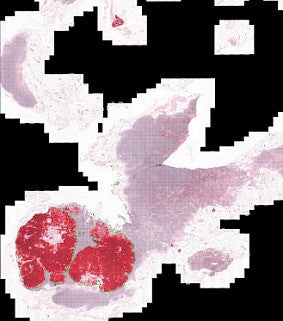
“I think what I am most interested in is the way data science is about making decisions quicker, more accurately and more in line with the values you're trying to meet. And so I think being able to predict and provide information is step one,” Searcy said. “I think step two is making sure that information is usable to people who are going to put this into practice and making sure that we're giving them the accurate predictions they need in a way that's useful for them to be making meaningful decisions.”
With topics as big as climate change, cancer research, parole decisions and helping the Ducks bring home more banners, making better decisions is a critical place to start.
—By Evan Ney '26, College of Arts and Sciences